
Introduction: Art Beyond the Gallery Wall
Where we usually find art is within museums, galleries, or exhibitions—the spaces created specifically to position the act of creativity itself within a realm that is to be observed, admired, and finally left behind. However, it is within more intimate spaces that we find the most significant connections to art to take place.
When art finds a place within our everyday surroundings, it does so in a manner that not only alters the spaces we find ourselves within, but the manner in which we interact within them.
To live with art has nothing to do with luxury or collecting. It has to do with presence. It has to do with being accompanied by creativity—in our walls, in our spaces, in the nooks and crannies of our daily lives. And with time, art goes beyond being a decoration in our space. It becomes a companion, a reflection, and a mirror of us.

Oversized original art in a living room by Decorilla
At Esefoke Timeless Art, we are driven by the philosophy that art must be lived with. Its beauty can only be experienced over time.
Art as a Living Presence in the Home
The moment art enters a living space, the atmosphere changes instantly. A painting can soften a room or energize it. A sculpture can weight and anchor a space with intention. Even the small-scale works-drawings, photographs, or objects-emit their quiet influence.

Painting displayed in a calm interior space by Decorilla
Unlike furniture or design trends, art is not merely serving a function. It means something. It demands no attention but beckons it. Over time, its presence becomes woven into daily life: glimpsed in passing, noticed again in new light, understood differently as moods and moments change.
This is art in the home becoming part of the rhythm of living.
How Art Shapes Emotional Well-Being
Coexisting with art has a subtle yet profound influence on our emotional well-being. Some art pieces radiate tranquility and quietness. Some other pieces encourage intellectualization or remembering. Gradually, this process influences our emotions in that space.
It can:
- Establish a feeling of comfort and familiarity
- Reflection and mindfulness
- Aid in emotional grounding during stress incidents

Original art in a dining room by Decorilla
In contrast to the digital content that requires our incessant attention, artworks permit slow engagement. They don’t rush us. They encourage us to slow down and breathe. They tell us to feel and remember.
“This quiet emotional dialogue is one of art’s greatest achievements.”
Personal Identity Expressed Through Art
In our choice of the art we would like to live with, the reflection of our identity may be seen. Whether deliberate or instinctive, individuals are drawn to works that speak to them and reflect themselves.

Custom made original artwork in a sunken living room by Decorilla
A home filled with art tells a story: that a family is living there
• Of personal taste and curiosity
• Of cultural connections and influences
• Of moments, places, and emotions that matter
It becomes a means of self-expression to live with art. It enables spaces to feel unique, not generic, created in terms of lived experiences, not trends.
Art and the Transformation of Space
The creativity of art is such that it is able to redefine space without necessarily altering the structural form of the space. This is the capacity of a piece of art to alter the perception of a room.
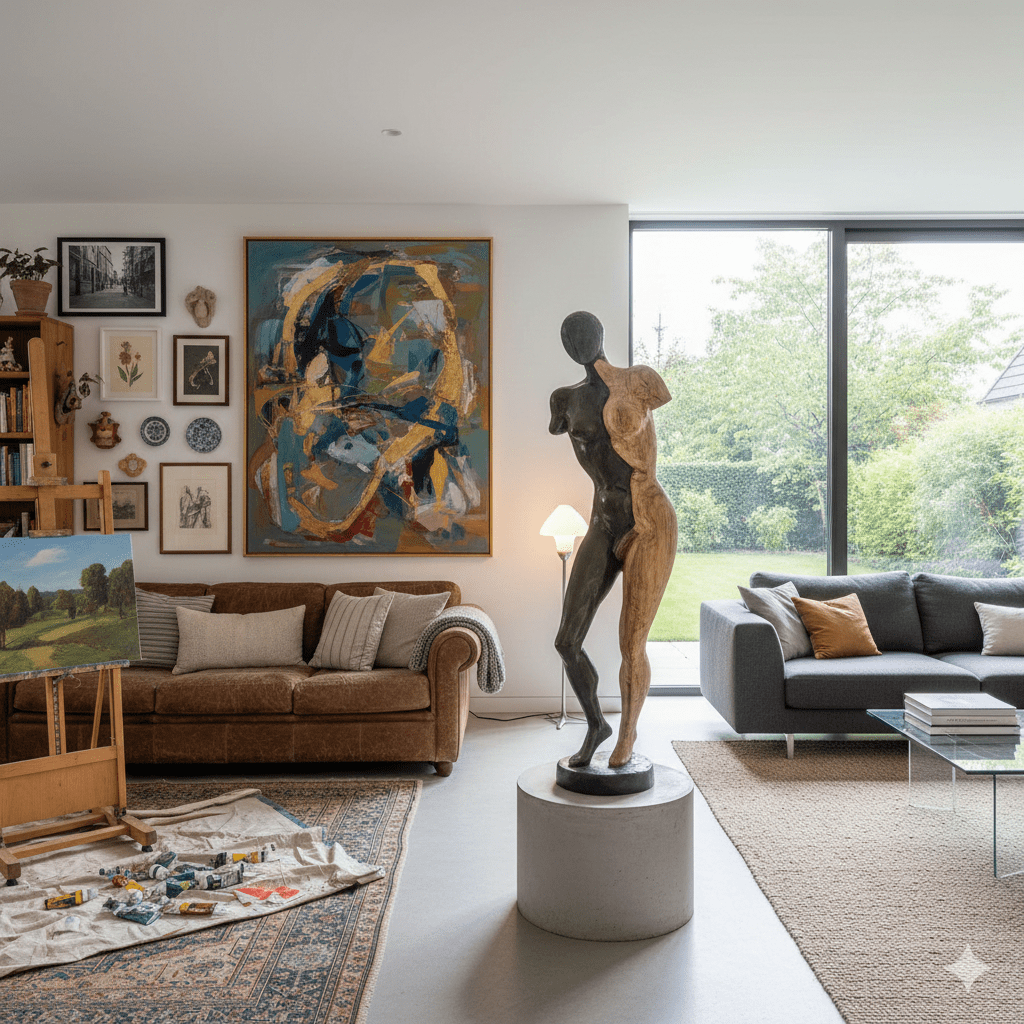
Sculpture placed within an interior space by Gemini
For instance:
• A big painting helps to define a room.
• Sculptures can bring flow to space.
• Several small pieces can lead to intimacy and narrative.
There is an interaction between art, light, architecture, and scale. With changes in daylight or seasonal changes, the same artwork ends up feeling absolutely different. This creates a dynamic between art pieces and living spaces that keeps those spaces vibrant.
Living With Art as a Daily Conversation
“Living with art is one of the most beautiful things about art itself—and one of the greatest advantages that art has over all the other arts: its ability to be there every day.”
An artwork may:
• Unveil information after a few months
• Means different things when experienced at different ages
• Help people feel comfortable sometimes and struggling to cope other times
This is a deeply human conversation. Art is a growth process with us. It is a reaction to our change, a reflection of it, in its own subtle way.
Art as Memory and Story
Artwork that is imbued with personal memory is very common in many people’s lives, whether it is artwork acquired while traveling, artwork gifted to an individual by loved ones, or artwork done by artists with whom one identifies strongly.

Artwork integrated into a personal living space – Pinterestimage
These artworks serve as a time capsule. We are reminded of who we were when we first viewed the artwork and how much we have grown from then to now. In this respect, art is a form of story-telling that is silent but powerful.
“Art holds a moment, not in words, but in presence.”
Creativity Beyond Ownership
One does not have to own an expensive piece of art in order to live with art. Creativity can infiltrate spaces in many ways:
- Prints and editions
- Handicrafts
- Textiles, Ceramics & Functional Art
- Works that are digital or projected
What matters is connection, not cost. It is then that art resonates in a scale and price that mean little. Supporting emerging artists, collecting slowly, or rotating works over time can all be part of a thoughtful relationship with art.
Art in Shared and Public Spaces
The effects of coexisting with artworks go beyond being confined to domestic spaces. Collective spaces such as working places, community centers, and public institutions like hospitals influence experiences through artworks.

Lobby, Rookery Building, LaSalle Street and Adams Street, Chicago
In these settings, artworks can:
• Establishes a Sense of Belonging
• Encourage calm and focus
• Spark conversation and communication
Art is a reminder of our shared humanity. It injects creativity into those areas in life where ritual and routine otherwise holds sway.
How Living With Art Changes Perspective
With time, being around art can alter one’s perceptions of the world in a subtle way. It is a way of training one’s eyes to see form, color, and detail.
Those who coexist with art experience the following:
• More alert to their surroundings
• Relatively more open to interpretation and ambiguities
• More comfortable with complexity and emotion
Art doesn’t present any solutions—it poses questions. This kind of openness can go beyond the boundaries of the house itself to affect the way that we interact with each other and the world.
Curating With Intention, Not Perfection
Living with art does not need perfect placement or curated aesthetics; it thrives on authenticity. Art can stand next to books, plants, and everyday objects. It doesn’t have to dominate a space for it to be meaningful.
For the curation of art in living spaces, it is an ever-evolving process:
• Works move as spaces change
• New pieces enter as others rest
• Meaning deepens through lived experience
This makes art flexible, not something fixed.
Final Reflection: Art as a Way of Living
Living with art is about relationship. It’s allowing creativity to share space with everyday life, to exist not as something separate but as something integrated.
Art works its magic on spaces not by some strikes of grandeur but by the heartbeats of presence. Art transforms lives, not by instruction, but by invitation. And with time, it becomes part of how we remember, feel, and understand ourselves.
We at Esefoke Timeless Art celebrate art not just as something to be admired, but as something with which one can live: quietly, thoughtfully, and meaningfully.


Leave a comment